
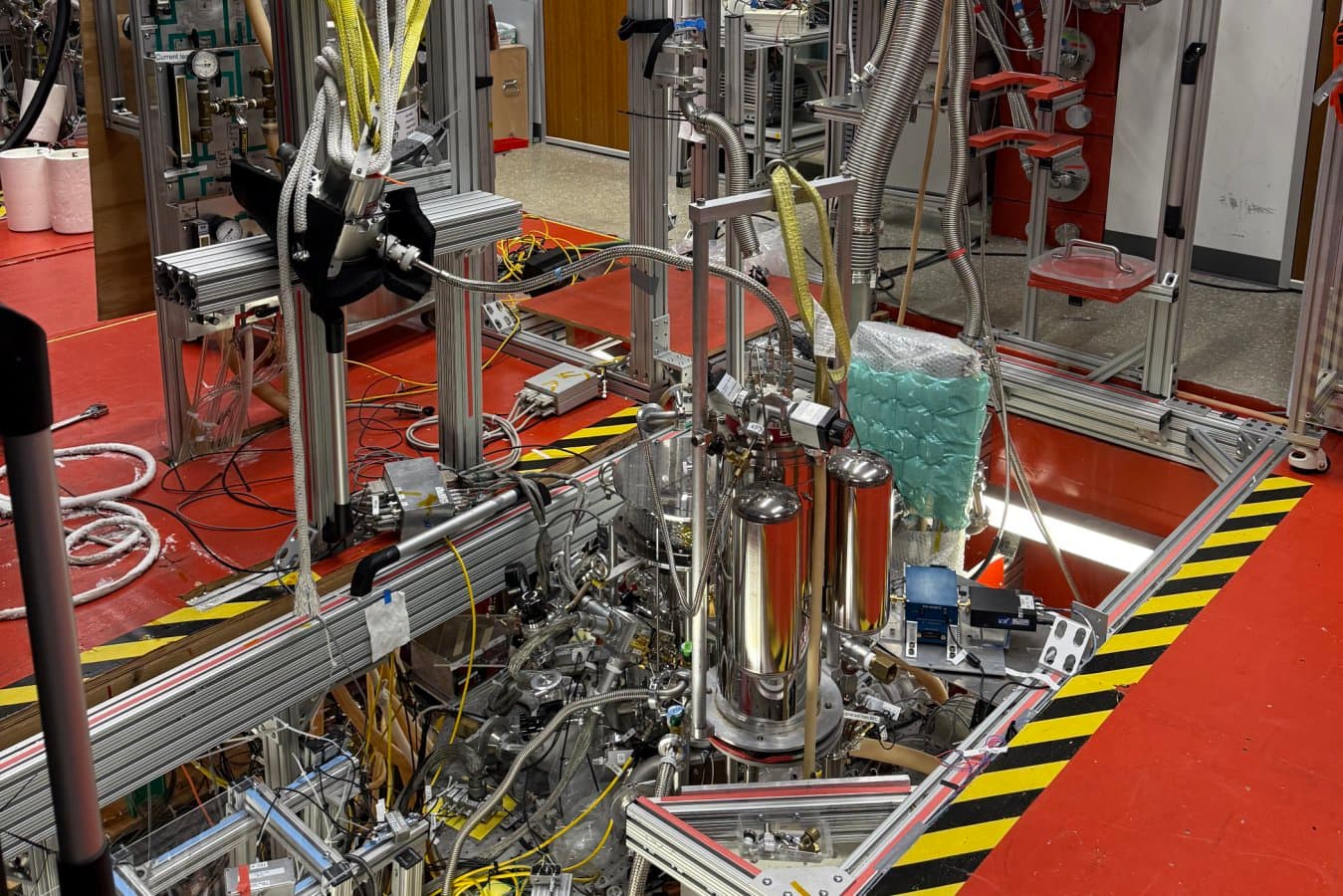
Gerald Gabrielse and his colleagues at Northwestern University in Illinois trapped a single positron for several months using a system of invisible walls. The team extracted the antiparticle from a radioactive isotope of sodium.
To reduce the energy and temperature of the sodium, researchers placed the material into a specialized refrigerator. Positrons were then directed through a tungsten crystal.
Electronic components produced electromagnetic fields that confined one incoming positron. Gabrielse aims to use this setup to measure the magnetic moment of the positron.
The research builds on previous work where the team achieved the most accurate measurement ever recorded of an electron's magnetic moment. According to the standard model, electrons and positrons should possess identical magnetic moments.
Stefan Ulmer at the Japanese scientific institute RIKEN said, "Trapping an antiparticle is extremely difficult." Ulmer added, "This has the potential to become one of the most precise measurements of a fundamental constant in physics."
Gabrielse noted that the standard model appears inconsistent or significantly incomplete regarding basic universal features, such as why the universe exists.