
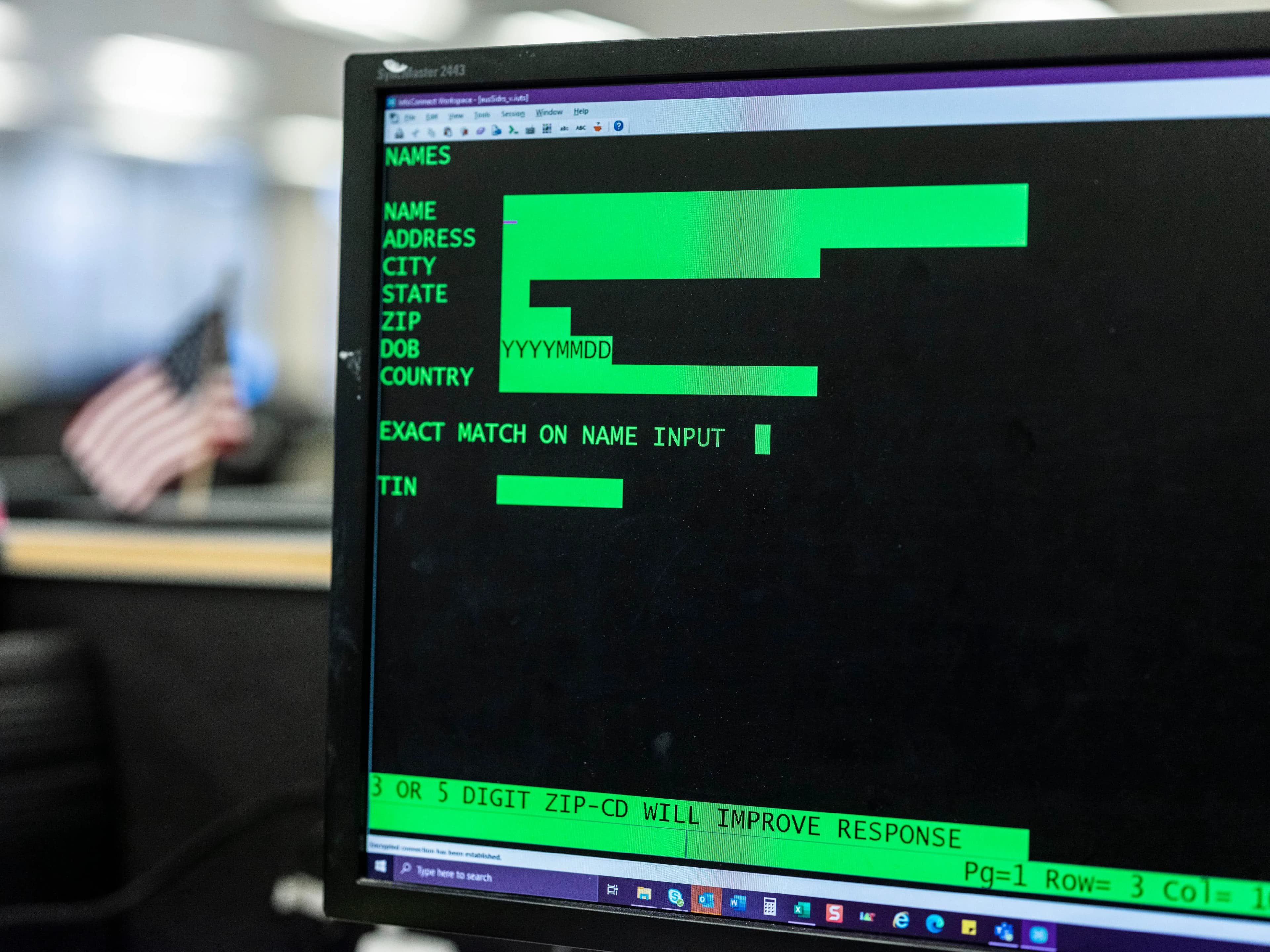
OpenAI reported that its AI models can migrate aging software written in older programming languages into modern code without altering original software behavior. The company successfully migrated COBOL code to several modern languages, including C++, Java, Kotlin, Python, and Rust.
OpenAI stated that a migration is considered successful only if all tests pass. Testing showed that GPT-6.1 Sol achieved 98 percent behavior preservation accuracy at higher reasoning levels, while it reached 87 percent at low reasoning effort.
Other models performed differently, with GPT-6 Astra scoring around 86 percent behavior preservation accuracy at low reasoning effort. In comparison, GPT-6 Sol scored 21 percent behavior preservation accuracy at low reasoning effort, and GPT-5.6 Sol scored 5 percent.
OpenAI said these evaluation results demonstrate progress toward more accurate, affordable code migration for teams modernizing the software their businesses depend on. According to IBM, the language supports 80 percent of in-person credit card transactions and handles 95 percent of ATM transactions.
Inefficiencies in COBOL cost the US GDP around $105 billion annually. Anthropic published a step-by-step code modernization playbook in February and pitched Claude Code as a way to migrate COBOL into languages like Java or Python.
Anthropic stated that the economics of COBOL modernization have shifted, causing shares in IBM to nosedive following the announcement. Oscar Haines said legacy code is still far from a solved problem.
Vadim Zaytsev said, "Rewriting code is not the same as replacing a system." Zaytsev noted the largest system he had seen contained 250 million lines of COBOL.
He added that AI is not playing a major role at the moment in replacing or migrating legacy COBOL systems. Arie van Deursen described the current evaluations as superficial and noted that maintaining is of course a lot easier than modernizing.
Van Deursen said, "The evaluations shown by OpenAI don’t address the key difficulty: Breaking up a complex legacy system into smaller units that can be replaced individually." Alastair Donaldson said, "The main challenge is indeed not understanding how the system works," and added that "nobody in their right mind would use COBOL for a new development project."
Jacopo Mauro said the process requires a huge amount of work and that human verification remains essential. Zaytsev warned that even minor differences in system behaviour before and after migration are unacceptable in many cases.
He asked, "What do you do with the remaining 1 percent? That 1 percent can be a million lines of code, spread all over the place and subtly failing in more ways you can imagine within your lifetime."