Pakistan possesses an estimated $8 trillion in mineral wealth spread across 600,000 square kilometres of territory. The country has identified 92 minerals, 52 of which are currently being extracted for commercial use.
Mining currently contributes approximately 3.2 percent of the national GDP, according to the US Department of Commerce. Part of the Tethyan Metallogenic Belt is included within Pakistan's borders.
The International Energy Agency reported that demand for key energy minerals continued to grow strongly throughout 2026. The Reko Diq copper-gold project is situated in the Chagai district of Balochistan.
Barrick Mining Corporation holds a 50 percent stake in the Reko Diq project. The Government of Balochistan owns 25 percent of the project, while three Pakistani state-owned enterprises hold the remaining 25 percent.
Barrick announced the completion of an updated feasibility study for the Reko Diq project in February 2025. The project has a total capital investment of $8.83 billion and an estimated mine life of 37 years.
Reko Diq contains probable mineral reserves of around 3 billion tonnes, including an estimated 15 million tonnes of copper and 26 million ounces of gold. Barrick estimates the Reko Diq project could generate $90 billion in operating cash flow.
First production from the Reko Diq project is expected by the end of 2028. The International Energy Agency projected that total lithium demand will more than quadruple between 2024 and 2040.
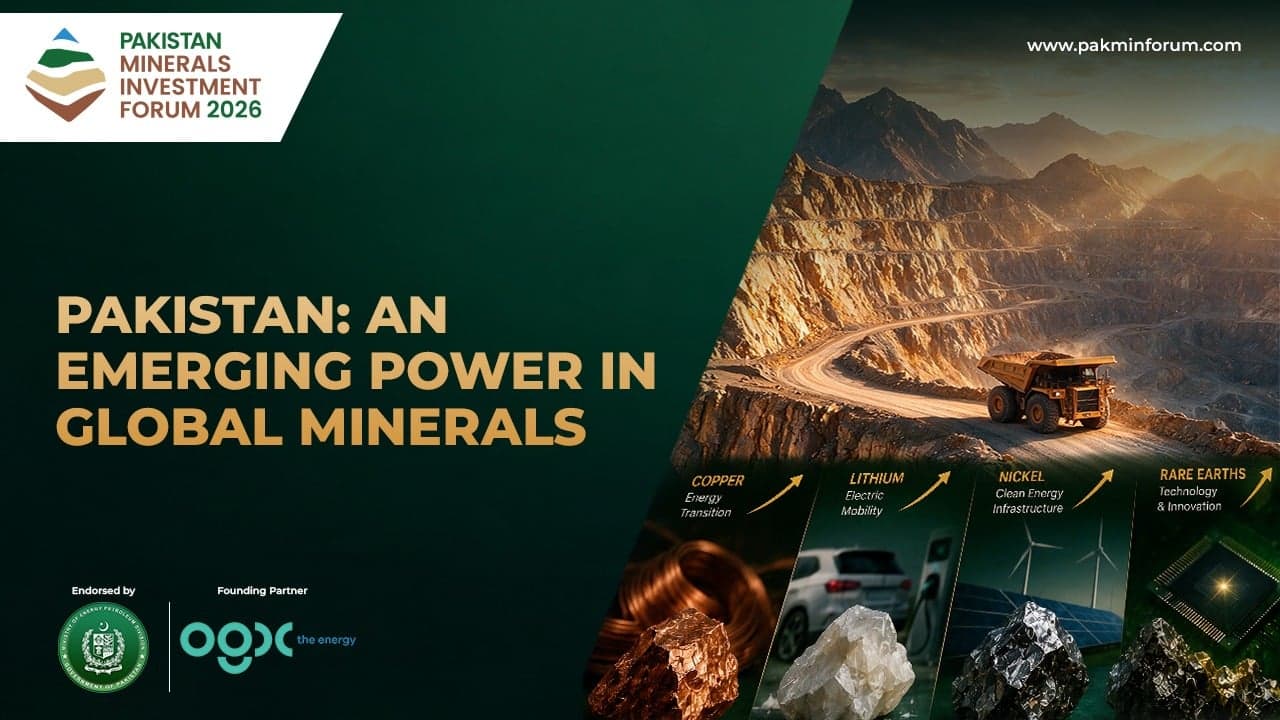
Oil and Gas Development Company Limited (OGDC) found lithium in formation water in July 2026 within a high-temperature geothermal well in Sindh. The government established the Pakistan Minerals Investment Forum (PMIF) and introduced the National Minerals Harmonisation Framework.
The National Minerals Harmonisation Framework 2025 includes the revitalisation of the Geological Survey of Pakistan and the digitalisation of geological data. PMIF26 will be held on November 12–13, 2026, at the Jinnah Convention Centre in Islamabad.
Previous event PMIF25 attracted more than 5,000 delegates from over 50 countries, resulting in 18 panel discussions and 16 MoUs and agreements signed.