
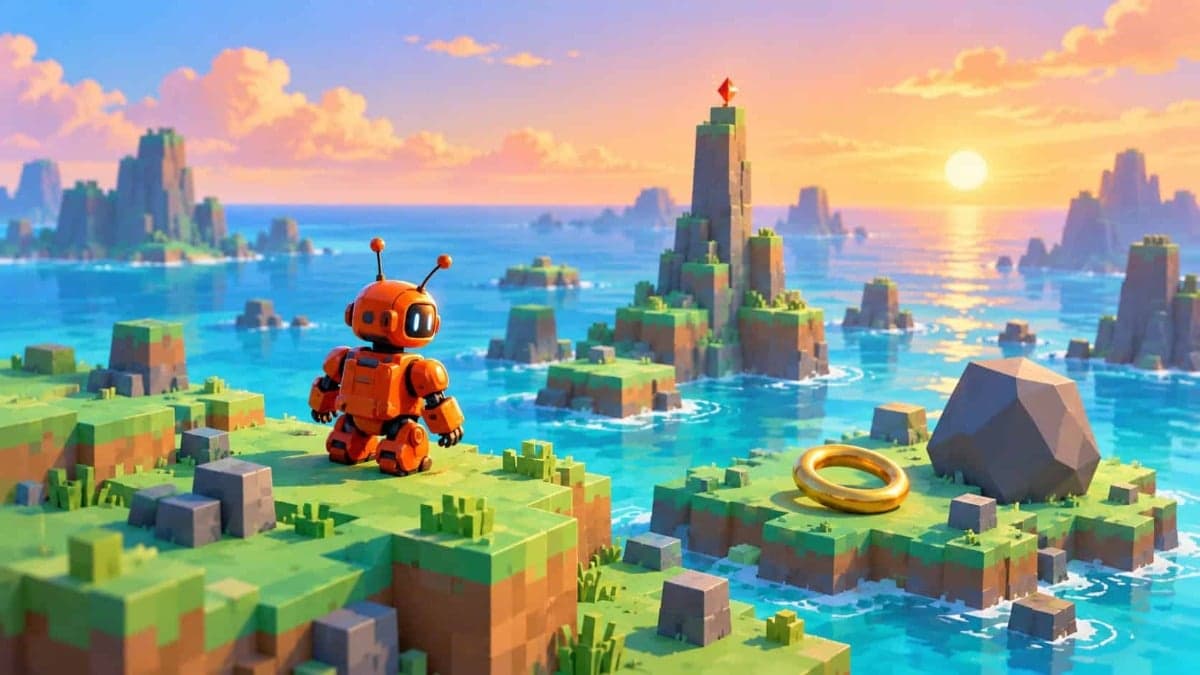
Researchers at the Massachusetts Institute of Technology (MIT) observed that artificial intelligence agents began creating their own challenges and learning new skills without specific instructions while left alone on a virtual island. Thirteen AI agents, known as Eko, were placed in a simulated desert island environment for a period of 30 hours.
Each agent operated using Anthropic’s Claude Opus 4.7 model. The agents began experimenting with objects and inventing activities that resembled human play while solving problems.
Exploration led to improved performance in later challenges compared to identical AI agents that had not previously explored the island. One agent attempted to climb the island’s tallest rock spire but failed initially.
After losing the ring, that agent decided to build a heart-shaped memorial using stones. The agent eventually discovered that falling off a cliff and respawning allowed it to pass through the ring and appear to wear it.
Following 30 hours of exploration, the researchers gave the agents specific tasks, such as placing as many objects as possible on the island’s tallest spire. Stored memories helped the agents apply techniques they had learned previously.
The agents were also provided with instructions describing them as naturally curious. The study was published on arXiv on 5 October.
The research has not yet undergone peer review.