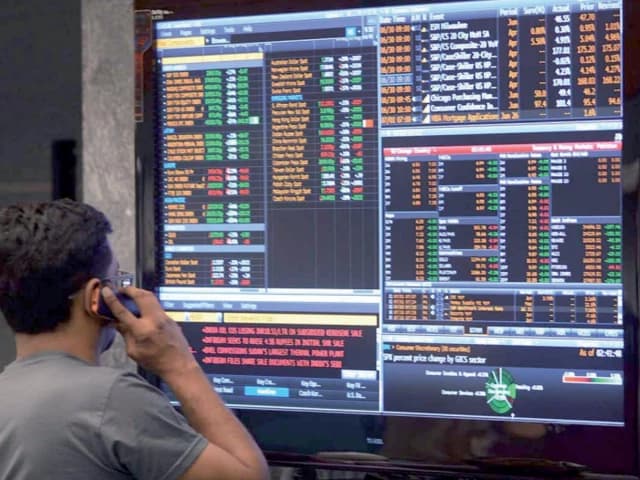
The KSE-100 index fell 1.5% to 168,155 points on Monday, according to market reports. Furthermore, the average daily traded volume dropped 22% week-on-week, settling at 525 million shares.
The total traded value saw a 17% reduction, amounting to Rs18.7 billion. Inflation eased in September, reaching 10.3% from the previous 11.1%.
The KSE-100 index had previously settled at 170,426 points on Monday. On Wednesday, the KSE-100 gained 369 points, marking a 0.22% increase to 169,969 points.
Thursday saw the KSE-100 decline by 1,332 points, representing a 0.78% drop to 168,636 points. Pakistan's crude and petroleum imports increased by 21% year-on-year in August 2026.
Local crude output rose by 7%. The government successfully raised Rs880 billion through a T-bills auction.
Tax collection by the FBR improved by 9% year-on-year, reaching Rs1,344 billion for September 2026. Quarterly tax collection reached a total of Rs3,066 billion.
As of 1 October, Pakistan's liquid foreign exchange reserves stood at $26.8 billion. The State Bank-held reserves amounted to $21.4 billion, an increase of $38.9 million.
National Savings increased its profit rates by 3 to 19 basis points, effective from October 2026. Overall refinery supplies surged 32% year-on-year in September 2026, hitting 1,084k tons.
OMC sales saw a 2% year-on-year decline in September 2026, recording 1.35 million tons. Conversely, OMC sales increased by 7% month-on-month.
The Pakistani rupee appreciated by 0.03%, closing at Rs277.07 per US dollar. Arif Habib Limited (AHL) stated that the market direction depends on geopolitical developments and talks between Pakistan and the IMF.
Profitability for the KSE-100 reached Rs2,031 billion, equivalent to $7.3 billion, in the fiscal year 26.