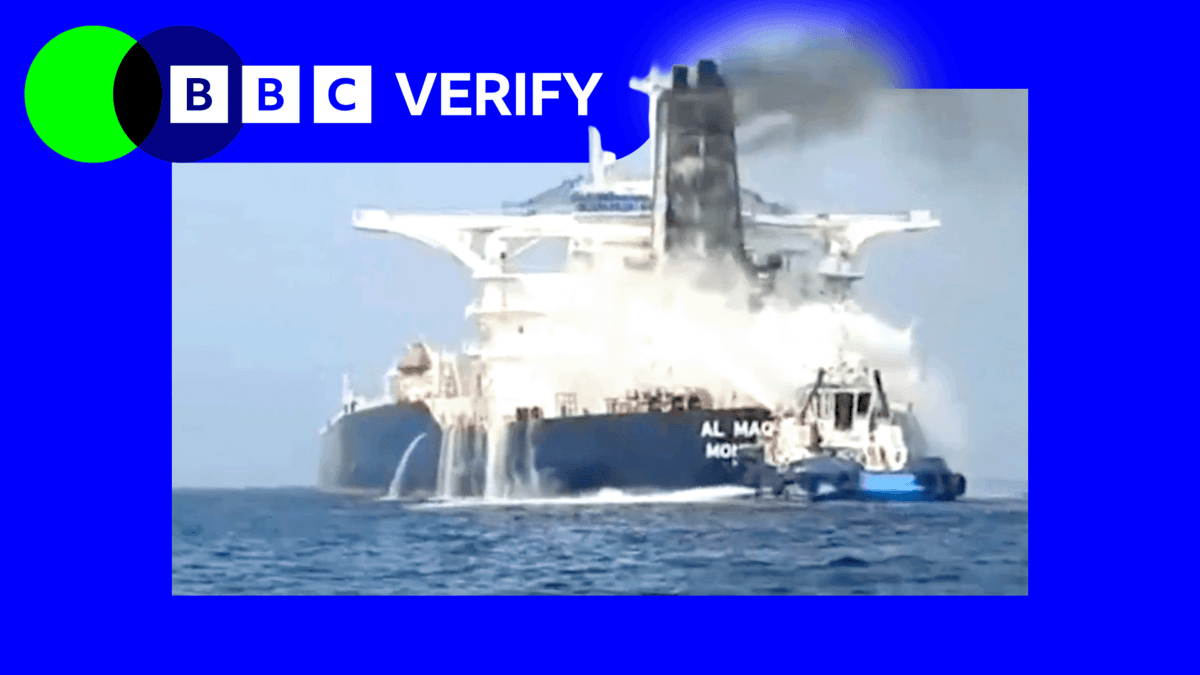
Twelve vessels were attacked in and around the Strait of Hormuz between 5 October and 11 October. Ten ships reported attacks during the week preceding 5 October, while six vessels were struck on Sunday, 5 October.
Four reported attacks occurred so far this week. A drone strike on the Nicaragua-flagged tanker Petro Dolphin near the Sohar Anchorage in Oman left two crew members missing.
The container ship GFS Pride sank on Tuesday, 7 October, after an unknown projectile hit it in the strait. Authorities evacuated twenty-one crew members from the GFS Pride following the sinking.
Additional strikes included a tanker hit by multiple projectiles north of Qatar on Thursday, 8 October, and another attack near the UAE town of Al-Jazirah al-Hamra on Friday, 9 October. The number of vessels receiving assistance to navigate the Strait of Hormuz during the first 10 days of October rose by 85% compared to the same period in August.
Oil shipments through the strait reached 12.6 million barrels per day on 13 October, down from 15 million barrels per day at the end of September. These figures remain below the pre-war baseline of 17 million barrels per day.
The US military's Central Command stated that "commercial traffic continues to flow through the Strait of Hormuz with co-ordinated protection from US forces and regional partners". Iran's Islamic Revolutionary Guard Corps (IRGC) navy announced a "new deployment formation" across the region.
Martin Kelly, CEO of Orbital Risk Intelligence, said Iran "evolved its strategy" to create "near daily or multiple attacks every single day". Kelly added, "The aim here is to stop the ships going through and to deter others".
Iran's Islamic Revolutionary Guard Corps (IRGC) claimed they intercepted "2,500 containers of contraband" using an "unauthorised route".
Martin Kelly, CEO of Orbital Risk Intelligence, said Iran "evolved its strategy" to create "near daily or multiple attacks every single day".
Martin Kelly, CEO of Orbital Risk Intelligence