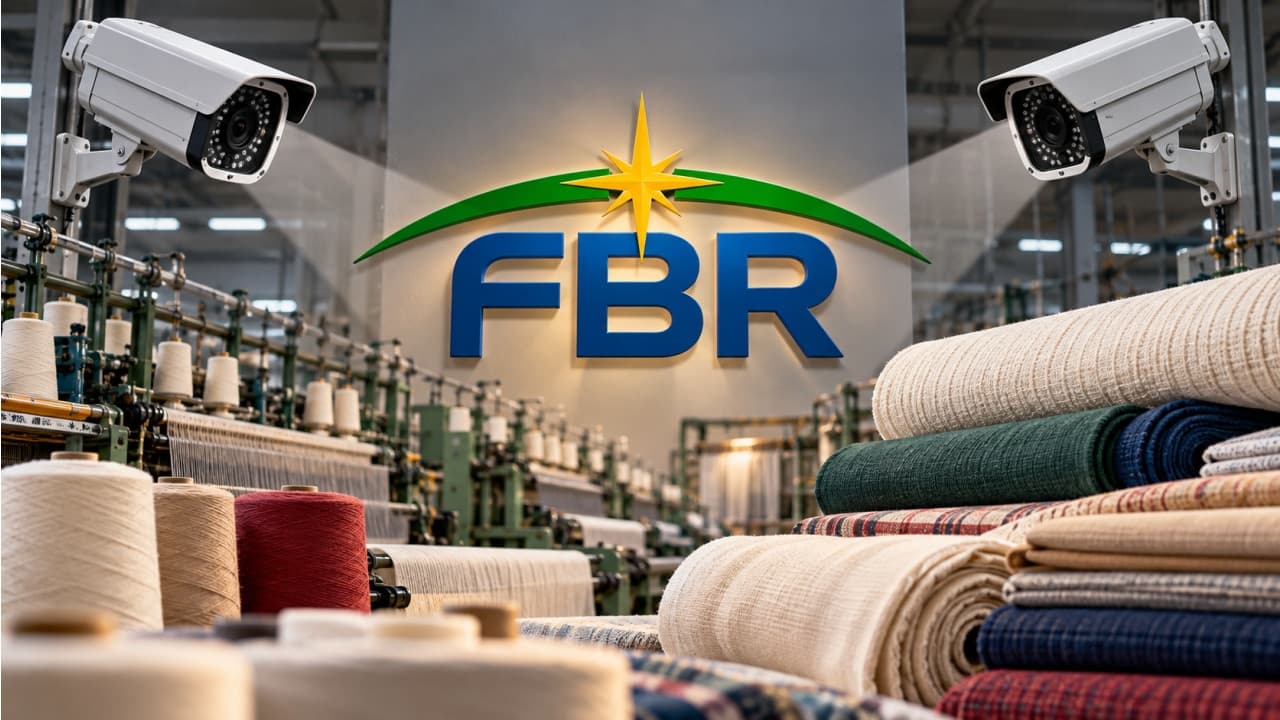
The Federal Board of Revenue (FBR) directed all registered textile spinning units to install video surveillance cameras by 15 November 2026. Issued on Monday, Sales Tax General Order No. 30 of 2026 mandates that these cameras monitor the processing of cotton and other natural, man-made, and blended fibers.
The FBR expanded electronic production monitoring to include loose, opened, and other non-bale forms of fiber, such as polyester, viscose, wool, and acrylic. These requirements supplement a previous order from 20 November 2025 and add monitoring for non-bale fiber processing to the existing system for cotton bales.
Specific locations for surveillance include hopper bale openers, hopper feeders, weighing hopper feeders, and blending feeders. The order also requires cameras on blow room lines for man-made fibers, acrylic processing lines, and waste openers handling soft waste, comber noil, and card flat strips.
Surveillance must also cover mixing or laydown areas where loose fibers are stacked or mixed. Vendors authorized under Chapter XIV BA of the Sales Tax Rules, 2006, must integrate video analytics systems to detect, count, and quantify fibers fed into production in loose or open forms.
These systems are required to capture production processes in real time, collect data through object detection, and transmit that information to the FBR’s Central Control Unit. The technology must also store and archive data, detect unexpected production stoppages, and analyze quantities to support legal action.