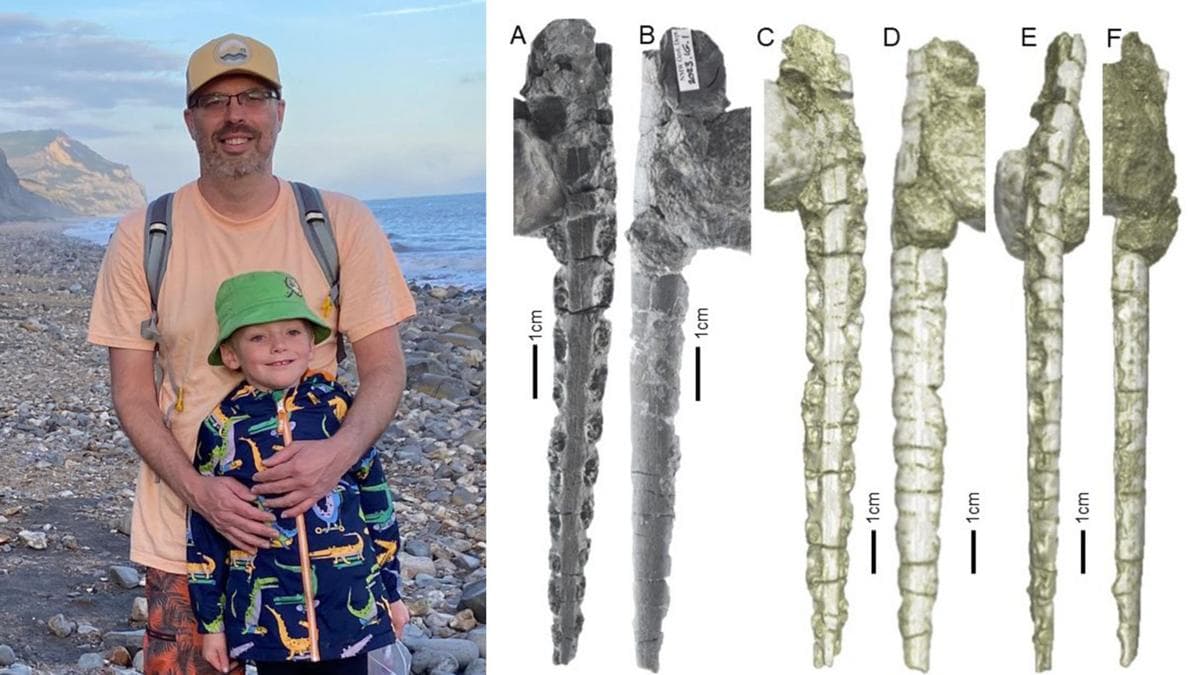
An amateur fossil hunter's discovery of a 200-million-year-old fish jawbone helped solve confusion regarding fossil origins across Europe. Previously, fossilised teeth from the Bristol Channel and other European sites were grouped together as one type of large ancient fish named Severnichthys.
However, the bone Jonathan Bow found on the Welsh side of the channel belonged to a different fish type. Museum fossils across the continent were wrongly grouped; they actually contained remains from two distinct species: Saurichthys and Birgeria.
Comparing the new snout with museum specimens from Britain and Europe provided clear proof that fossils previously thought to be Severnichthys were actually a mix of two separate species. The teeth are believed to originate from two Triassic era fishes: Birgeria and Saurichthys.
Saurichthys was a predator fish that lived in shallow tropical seas during the Late Triassic period. Many teeth from Saurichthys were once mistaken for those of an amphibian, and this misunderstanding persisted into the 20th Century.
The fossils found in the Bristol Channel came from storms that occurred 200 million years ago. Jonathan Bow spotted what appeared to be a jaw while walking along the beach in the Vale of Glamorgan at low tide in the spring of 2012.
Jacob Quinn, a lead researcher at the University of Bristol, researched Bow's collection in 2022. Saurichthys was probably a fast and agile hunter, whereas Birgeria was larger and more powerful, likely feeding on a wider range of prey.
The Saurichthys bone discovered at Lavernock by Bow will be displayed at National Museum Cardiff later in 2026.
Dr Sam Cooper stated, "It's amazing that a single fossil, found by Jonathan Bow during a spring tide, has helped clear up nearly 200 years of confusion."
Dr Sam Cooper