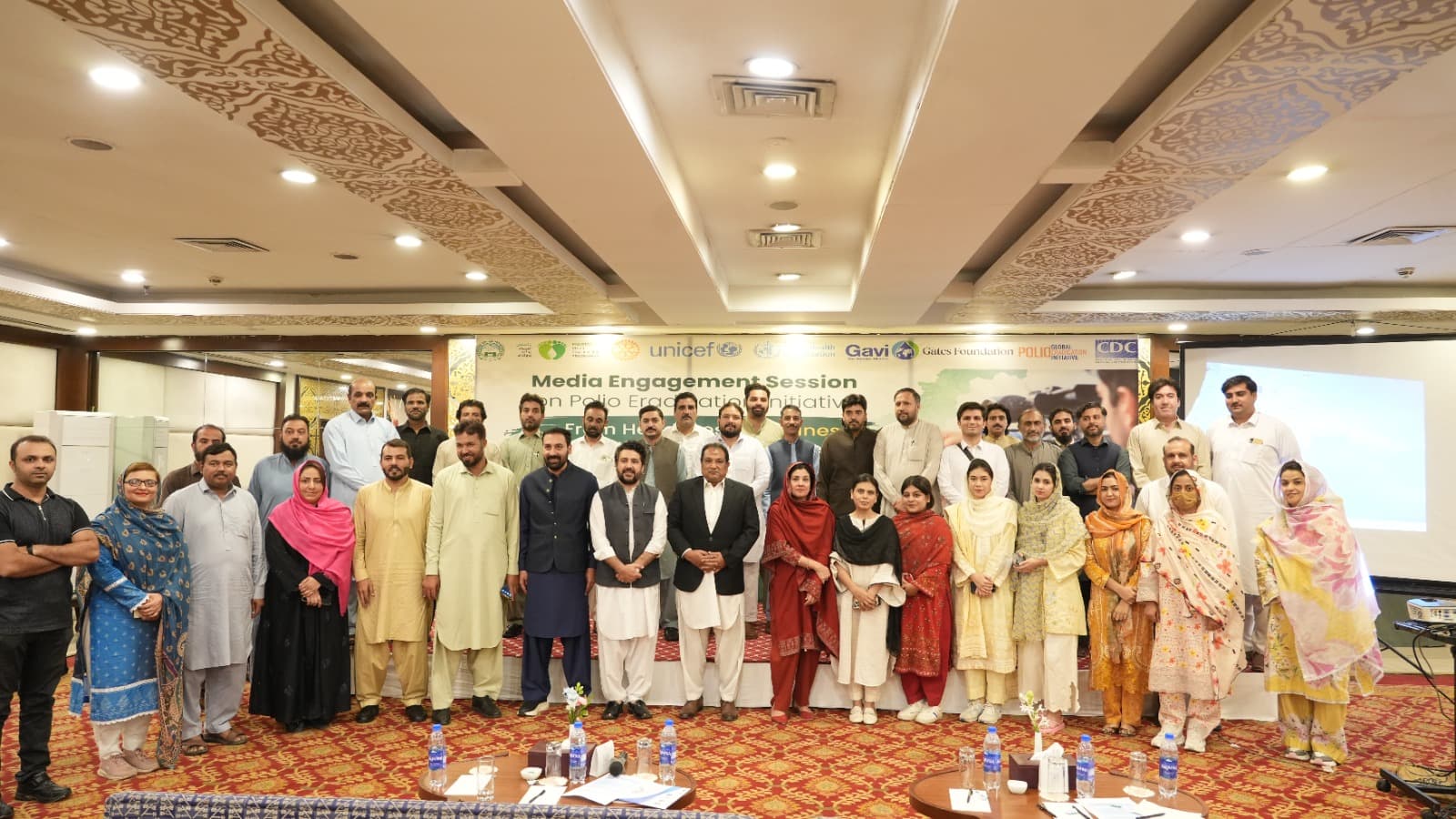
The Emergency Operation Center (EOC) polio Khyber Pakhtunkhwa hosted an 'Annual Engagement Session' with the media on 20 October. Titled 'From Headlines to Life Lines: Reporting for a Polio-Free KP', the event featured Sarah Rehman, the EOC Coordinator.
Representatives from the World Health Organization (WHO) and Shadab Younas, the Communication Officer for Polio UNICEF, also participated in the meeting. Rehman stated that every segment of society must contribute to the national cause of clearing the country of polio.
She added that even if media efforts lead to a single household opening its door for polio workers, it would represent a great success. The coordinator emphasised the necessity of a collective effort to change public mindsets, tackle social barriers, and eliminate misconceptions regarding the vaccine.
Rehman noted that the upcoming IPV campaign serves as a path toward eliminating the disease and protecting future generations. She also underscored the requirement for more effective and coordinated vaccination campaigns in southern Khyber Pakhtunkhwa and its adjacent regions.
Dr. Sardar Alam of WHO said the region is very close to eradication, but the final step requires joint efforts to remove mistrust and provide proper awareness. Alam explained that the polio virus is endemic in certain areas where it survives in sewerage lines.
He noted that cases are only reported in Pakistan and neighbouring Afghanistan. The virus detected in Peshawar's sewerage lines originated from Nangarhar, Afghanistan, according to Alam.
WHO is planning a supplementary program alongside routine immunization to achieve complete eradication. Alam stated that the IPV and OPV vaccination campaigns target children aged 5 to 10 years to end the 'Chain Circulation' of the virus.
Younas said that changing public behavior and mindsets is a prerequisite to wiping out the disease. Younas confirmed that salaries for polio workers have been increased and steps have been taken to build their capacity.