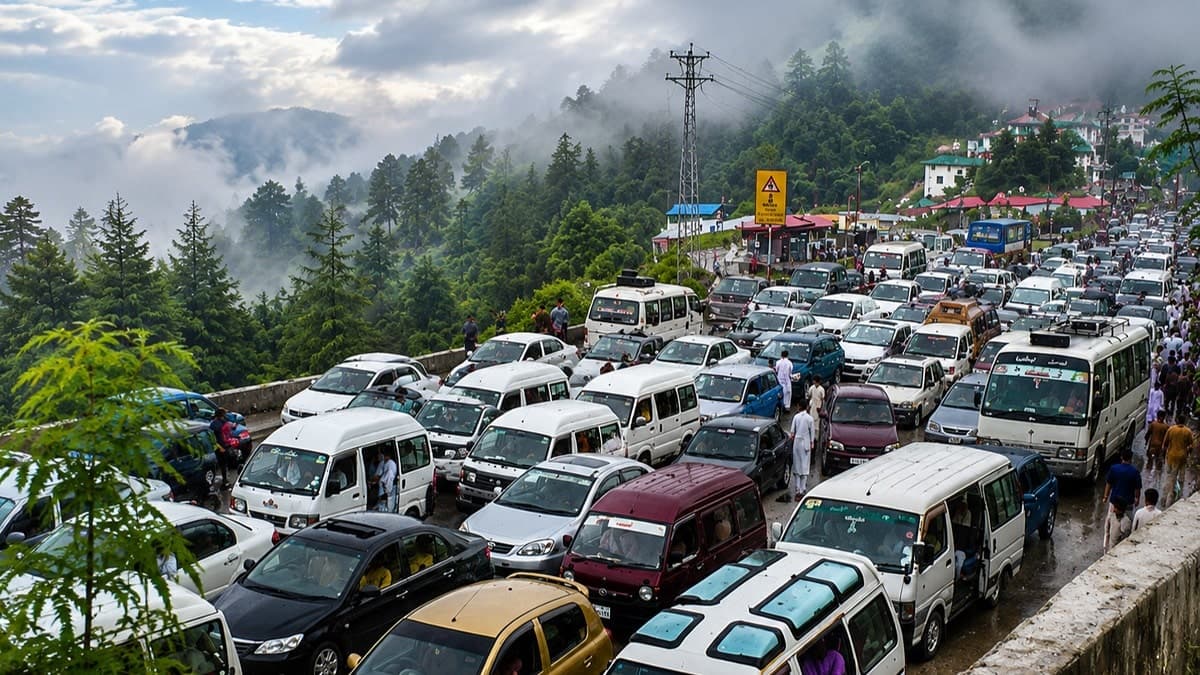
Pakistan's vehicle population grew by more than 770 percent over the last 35 years, according to a study by the Pakistan Institute of Development Economics (PIDE). The total number of vehicles rose from 4.47 million in 1990 to over 39 million by 2025.
Private vehicles accounted for the bulk of this growth, increasing from 1.42 million in 1990 to 35.87 million in 2025. Public transport numbers remained relatively stable at between three and four million during the same period.
Easier access to auto financing served as a primary driver for this expansion, which accelerated rapidly after 2015. Road transport carbon dioxide emissions climbed from roughly 13.8 million tonnes in 1990 to 43.6 million tonnes in 2023.
Emissions saw temporary drops during the 2020 COVID-19 lockdowns and again in 2022 because of rising petroleum prices and widespread flooding. Transport contributes approximately 81.3 percent of carbon monoxide emissions in Lahore, where poor air quality is estimated to reduce average life expectancy by seven years.
In other cities, transport accounts for 53 percent of emissions in Islamabad-Rawalpindi, 51 percent in Peshawar, and 33 percent in Karachi. Widening roads and building more flyovers may encourage private vehicle use rather than easing congestion, potentially increasing travel distances and worsening inequalities for public transport users.