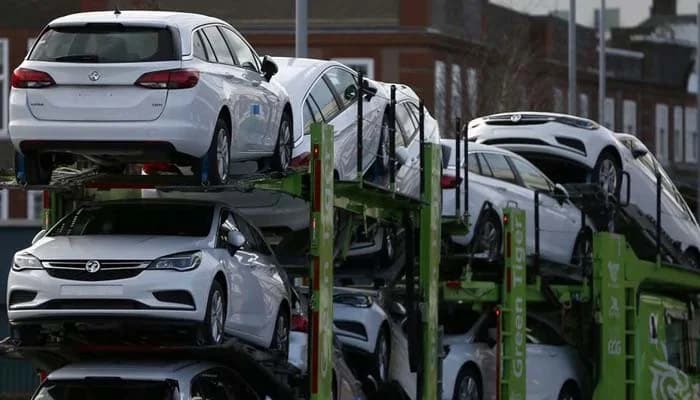
Prime Minister Shehbaz Sharif gave in-principle approval to the Auto Policy 2026-31 to restructure the nation's automotive sector. The policy proposes lowering the average tariff to 15% while introducing an Auto Development Levy to collect Rs232bn over a five-year period.
To drive industrial growth, the government set mandatory export targets including $6 billion for cars, jeeps, SUVs and double-cabins, and $2.078 billion for tractors. Additional export goals include $409.4 million for bikers and rickshaws, alongside a $3.29 billion target for parts manufacturers.
The government intends to promote electric vehicles to address the fact that 80% of environmental pollution stems from vehicular emissions. New sales tax rates under the proposal include 1% for Battery Electric Vehicles (BEVs), 6% for Range Extended Electric Vehicles (REEVs), and 9% for Plug-in Hybrid Electric Vehicles (PHEVs).
Hybrid and ICE vehicles will face a sales tax of 18%, while the State Bank of Pakistan is expected to increase the credit limit for new energy vehicle financing from Rs3 million to Rs10 million. The State Bank of Pakistan is also proposed to extend the financing tenor for these vehicles from 3 years to 5 years.
Import tariffs for small EVs valued under $15,000 CIF will be reduced to 5% for the first two years, with a 1% rate for EV-specific non-localised parts or CKD imports. Regarding the development levy, cars up to 1,000cc will pay zero, while those between 1,000cc and 2,000cc will be charged 2%.
Vehicles between 2,000cc and 3,000cc, as well as those above 3,000cc, will be subject to a 10% levy. The proposal also sets a 2% levy for imports of prime movers, buses, and trucks.