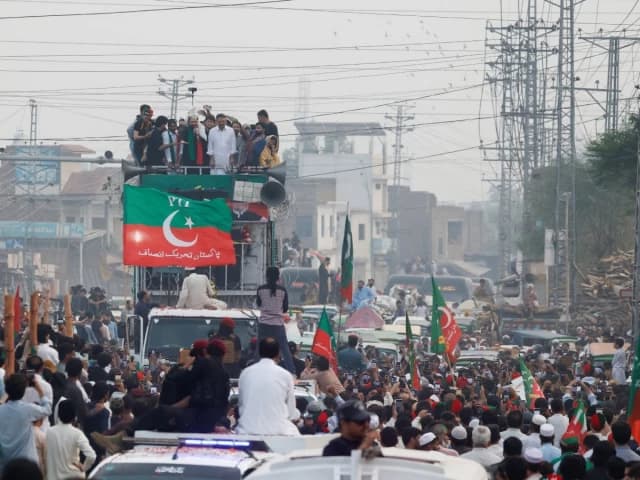
Pakistan Tehreek-e-Insaf (PTI) core and political committees established a fact-finding committee to investigate the failure of the party's long march. Participants blamed suspended Khyber-Pakhtunkhwa Chief Minister Sohail Afridi for the logistical shortcomings that hindered the protest.
The committees also deliberated on holding Barrister Muhammad Ali Saif accountable for issues regarding access to the imprisoned PTI founder Imran Khan. Demands emerged from members to transfer responsibilities currently held by Mahmood Khan Achakzai, the leader of opposition in the National Assembly, and Allama Raja Nasir Abbas, the leader of opposition in the Senate.
The party originally scheduled the march to Islamabad for 27 September but postponed it until 4 October. On 11 October, the federal government removed the PTI provincial government in Khyber-Pakhtunkhwa and declared an emergency in the province.
Officials stated the emergency was imposed due to a rise in terrorism and the provincial government's inability to manage the threat. Salman Akram Raja noted that turnout was notably low in Mardan and Charsadda, while describing the event as a street movement rather than an organised march.
Raja also highlighted that essential preparations, including tents for overnight stays, were inadequate. Despite these criticisms, Raja described Sohail Afridi as a courageous young leader dedicated to the ideology of Imran Khan.
Raja warned against presenting core committee discussions out of context to advance what he described as conspiratorial narratives against Afridi.